
What does an HVAC technician do?
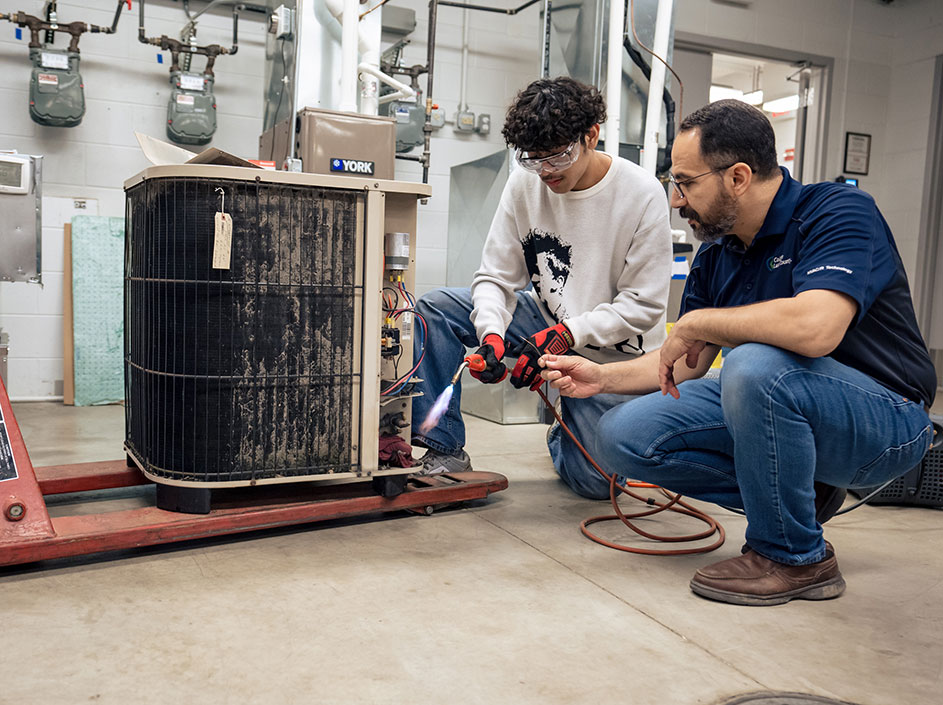
An HVAC technician maintains healthy climates in homes and businesses.
HVAC stands for heating, ventilation and air conditioning. People who work in this field keep buildings cool in summer, warm in winter and well-ventilated throughout the year.
They provide safe and comfortable environments in which we live and work. Their role is vital: It’s hard to function when you’re shivering or overheated. And it’s essential to maintain buildings. When structures get too hot, floors and walls can warp, and mold may grow. Too cold? Pipes burst.
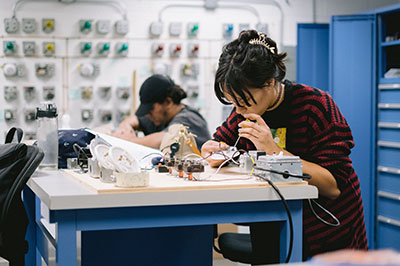 Technicians who start a career in this trade can specialize in:
- Residential heating – Service furnaces and heat pumps to keep homes warm. Plus, protect residents from carbon monoxide poisoning.
- Residential air conditioning – Maintain and repair AC units and heat pumps. Help homes stay cool and humidity levels low when it is hot outside.
- System installation – Remove old furnace and AC units and install new ones. Install or modify ductwork.
- Electrical troubleshooting – Diagnose problems with electrical circuits and components.
- Commercial refrigeration – Maintain and fix reach-in and walk-in coolers, freezers, ice machines and similar equipment. When you see the letters HVAC/R used, the R stands for refrigeration.
Where to get HVAC technician training
The College of Lake County (CLC) is one of the best HVAC training schools in Illinois.
Class sizes are small, so you get personal feedback from teachers. Instructors have real-world experience. They teach skills you can use with confidence in the field. Local employers offer apprenticeships and internships. This lets you earn money and gain experience while going to school.
Eight different degree and certificate programs are available. You can combine certificates to earn an associate degree in this field. Fast track programs let you start a career in as little as 4 months.
Depending on the program you choose, it takes one to two years to complete school. The cost of tuition and comprehensive fees ranges from $2,492 to $10,858. Some courses may incur additional costs because they provide specialized equipment and experiences. CLC offers financial aid and scholarships to help you pay for trade school. Workforce development grants are available for some students. Learn about financial aid.
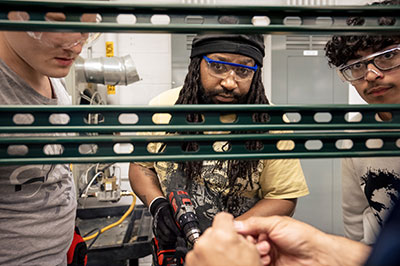
In school, you will learn
- principals of HVAC/R
- how to work with refrigerants
- how to read electrical wiring diagrams
- how to install, maintain and repair systems and controls
You will learn to use tools and equipment in a modern lab, honing skills in
- electrical circuitry
- plumbing and pipefitting
- load calculation
- sheet metal fabrication
- flaring, soldering, brazing
- digital controls
Classes also prepare you to earn EPA 608 Certification, which you need to work in this field.
Is HVAC a good career?
Yes! The job market is strong for heating, air conditioning and refrigeration mechanics and installers. Employment is expected to grow 11% through 2035, reports the U.S. Bureau of Labor Statistics. About 48,200 jobs need to be filled each year.
Two things are causing this growth, states the Air Conditioning Contractors of America Association, an industry trade group. First, homeowners want more energy efficient heating and cooling systems. Second, more new homes are being built. That means more HVAC systems need to be installed and serviced than before.
How much do HVAC techs make? The typical salary is about $76,173 in Lake and Cook Counties. Find HVAC career outlook data from CLC. You may earn less starting out in this field. You earn more as you gain experience and take on supervisory roles.