
How to land a career-boosting internship: College of Lake County experts weigh in
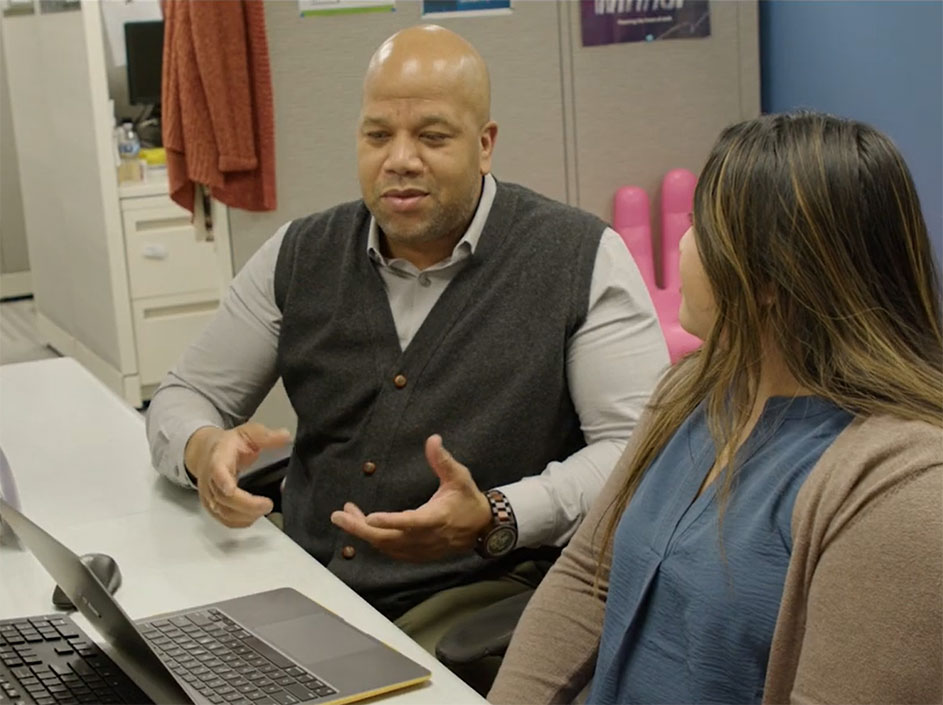
In today's competitive job market, college internships are more important than ever. But getting a good one can be challenging. You have many internship options and it can all get very confusing.
Not to worry. The Career and Job Placement Center at CLC has experts who will walk you through the entire process of applying, interviewing and landing an internship.
And yes, you can get an internship as a student at CLC. CLC is a two-year school that works closely with major local employers to give students valuable on-the-job experiences.
Read more to get the rundown on internships – why they’re important, the different types available and tips from career experts to lock in an internship.
Quick Summary:
- Internships are a steppingstone towards your future career. Learn how internships can help you explore a career.
- Gain skills and get paid all while in school. Discover the many ways internships can pay off.
- Career experience comes in many forms. Explore how CLC can help you find the position for you.
- Real-world experience makes all the difference when landing a job. Learn how professional experience can help you land your dream job.
- The process of getting an internship doesn't need to be confusing. View a list of steps to take to get an internship.
Explore careers early with internships
An internship is a type of job that introduces you to a career. It is a great way to learn about a career path before committing to a long-term job. This experience helps you better understand what the field or industry is all about, as well as develop your professional skills.
"Internships are an opportunity for students to take classroom learning and apply it in a work setting,” says CLC Career Readiness Manager Barbara Billimack.
 Internships help strengthen both your technical and professional skills. You’ll develop essential workplace skills such as teamwork, problem-solving, communication and time management.
CLC can help you get an internship in many fields. While a student at CLC, Riley Pemstein sought an internship through the Career and Job Placement Center, which introduced him to the field of accounting.
“That experience taught me so much about what it’s like to be an accountant,” Pemstein says. “I never had any interest in it until the internship, and then it became what I wanted to study.”
After CLC, Pemstein transferred to University of Illinois Urbana-Champaign to earn his bachelor’s degree, secured his Certified Public Accountant (CPA) license, and now does tax accounting for high-net-worth individuals at a major accounting firm.
“I wouldn’t be where I am now if I didn’t pursue that internship,” recalls Pemstein.
Read more about Pemstein’s internship experience at CLC:
Internships can turn into a part-time or full-time job. “If the employer really likes the work that an intern has done, and if they have an opportunity available, they may encourage the intern to apply,” Billimack explains.
Specifically, 63% of interns become full-time workers, according to a survey of 284 employers by the National Association of Colleges and Employers.
Internships through CLC open the door to a world of opportunities, all while you are completing your schoolwork.
Find an internship that works for you
Internships come in many forms, varying in length, compensation, and location. These details are typically outlined in the job description.
Semester, summer or more: Internship length varies
 How long an internship lasts can vary from job to job and employer to employer. Some internships are during summer. Some are during the school year.
“An internship usually lasts for a semester, but an employer may extend it if they like your work,” says Career Readiness Manager Barbara Billimack. She works with students to find internships at College of Lake County’s Career and Job Placement Center.
An internship also can be your foot-in-the-door at a company. It can turn into a full-time or part-time job. Always keep in mind your schedule and available hours to work when applying for internship positions.
Paid or unpaid? Both kinds of internships have value
Internships can be paid or unpaid. Paid positions often are harder to get because more students apply to these positions. The amount you can earn varies. Some companies pay more generously than others.
While paid internships offer direct income, unpaid internships also come with perks. You might earn academic credit for your work, along with gaining hands-on experience, professional networking and mentorship opportunities. Don’t dismiss an internship just because it’s not a paid position. The experience may pay off for you in the long run. And makes you stand out amongst candidates who didn’t pursue an internship.
That being said, it’s hard to work without pay. So, the Career and Job Placement Center strives to offer only paid internship experiences for students. Learn more when you schedule an appointment by emailing cjpc@clcillinois.edu or calling (847) 543-2059.
Can I earn academic credit from an internship?
Academic credit is a great way to get “paid” for an internship. Any internship, paid or unpaid, can be eligible to enroll for academic credit, and the Career and Job Placement Center can help you decide if that is right for you. Career Specialists can discuss the internship with you and review the requirements. That college credit can be used toward earning your associate degree or career certificate, potentially saving you money from tuition payments.
To get academic credit for an internship at College of Lake County, you must have at least 9 credit hours completed and a cumulative GPA of at least 2.25. You must get approval from your Academic Success Advisor and the Career and Job Placement Center to ensure the internship aligns with your academic plan. And the department chair must set the learning objectives for the internship. Once these steps are done, you can submit your internship for academic credit.
Work from home or in-person: Pros and cons
 Usually, internships are in-person roles, which helps you learn about workplace culture. Working in a professional setting is a new experience for many students. Learning how to navigate that world helps you be successful in your future career.
Some internships allow interns to work from home. An internship might be completely virtual, or you might work from home on certain days of the week. An internship with work-from-home flexibility is a great option for students with busy schedules or long commutes. These roles may be more difficult to find, however.
Part-time or full-time? Find your fit
Employers may offer part-time or full-time internship positions depending on their needs. Part-time positions are typically 10-20 hours per week. Part-time positions are great for students. They offer work-life balance and more time for schoolwork.
Full-time positions are 40 hours a week or more. They may be offered during summer months when you can work more if you’re taking fewer or no classes. These positions let you gain more experience since you are spending more time in the role.
Help for landing an internship
A strong resume and good interview skills increase your chance of landing an internship. Develop both with help from the Career and Job Placement Center at College of Lake County. At the center, experts review your resume to ensure you’re presenting yourself as a strong candidate. And they help you prepare by holding mock interviews.
Schedule an appointment by emailing cjpc@clcillinois.edu or calling (847) 543-2059.
Other ways to get career experience... and pay for college
Internships are a great way to explore careers early, build your professional network and even make some money to help pay for college. But they’re not the only option.
Part-time jobs and apprenticeships can also help you achieve your goals.
Earn money and experience with a strategic part-time job and student employment
 Like internships, part-time jobs involve interviewing and accepting an offer of employment. Wages are part of the discussion and presented in the job offer. Part-time employees stay employed until they or the employer decide to end the agreement.
Part-time jobs are a great way to earn money while in college. But depending on your role, they might not directly prepare you for a future career. When possible, be strategic when accepting a part-time job offer. Will you learn about the field you eventually want to enter? Will the skills you gain prepare you for a future role? Are there opportunities to take on more responsibility as your knowledge grows?
Unlike internships, part-time jobs may not always provide flexibility when it comes to the hours you work. However, as a student worker at CLC, you get both flexibility in working hours and experience.
While a student at CLC, Estefanni Caballero had a part-time job at the college’s public relations and marketing department. Now, Caballero works for Fischer Paper Company. Skills she learned and used in CLC’s public relations and marketing department transferred to her new position. "Having experience in a student job helped me feel prepared to step into a professional role” says Caballero.
After graduating from CLC, Caballero transferred to Lake Forest College. There, she received a full scholarship through the Schreiber Foundation to study marketing.
Learn how CLC student Estefanni Caballero turned work experience to career success.
Apprenticeships pay for college and teach work-ready skills
Apprenticeships let you earn money while you learn in college. Your employer covers some or all of the cost of your college education while you work as an employee.
“It’s more like a contract between the company and the employee,” Billimack explains. The employer works with the Career and Job Placement Center to create an academic plan for you to follow. “The company will provide some feedback on what courses would be best for that employee to work at their company. And the employer is investing in the student by paying for some or all their tuition,” she says.
An apprenticeship is a long-term commitment, lasting a year or more. It also is typically a full-time position. By comparison, internships are typically short-term and may be full time or part time.
As an apprentice, you gain more direct mentorship and structured training. You immediately enter the workforce while attending school. And potentially walk into a full-time role at that employer once you complete your certificate or degree.
As an intern, you gain varied experience and complete more general tasks.
Both apprenticeships and internships offer great professional experience. The path you choose depends on the type of experience you want.
 At CLC you can get an apprenticeship in the following fields:
- Business Administration
- Early Childhood Education
- Horticulture
- Network Administration and Cybersecurity
- Criminal Justice
- Manufacturing
Read about the Criminal Justice apprenticeship at CLC.
Watch a video to learn how apprenticeships work at CLC
To become an apprentice, you must be:
- 18 years of age or older
- Eligible to work in the U.S. (citizen or permanent resident)
- Have a cumulative 2.0 GPA (current CLC students)
- Meet all academic requirements at CLC
Internship experience helps you land the job
Internships provide real world experience in your field of study, giving you a leg up when applying to full-time positions.
 Internships give you the chance to take what you’re learning in the classroom and actually apply it. You can try out different industries, companies and locations to see if a career is the right fit for you.
Having an internship on your resume shows employers that you can manage your time, you have working knowledge in a particular industry or field, and that you can navigate a professional workplace.
According to a 2026 report from ZipRecruiter, students who completed an internship were more likely to get a job offer before graduation. Employers value internship experience, which may potentially lead to earning a higher starting salary after completing your degree or certificate.
Want an internship? College of Lake County helps you throughout the entire process.
Explore how CLC helps you intern
Don't delay real-world experience: Internships available for all students
Many students think internships only are for college students getting ready to graduate. That’s not true. College of Lake County can help you get an internship much earlier in your college career. “Some students think, ‘If I'm going to transfer to a four-year school, I'll do an internship when I get there,' but we have lots of companies that want to offer internships to our students,” says Billimack.
Learn about these opportunities by exploring Handshake and Forage using your student credentials. You can see which employers are hiring and complete job simulations to explore what certain roles are like.
 CLC instructors also work closely with local employers. They often know companies and professionals who want to hire interns, as well as other door-opening opportunities.
Jocy Flores was a culinary student at College of Lake County when she competed in the Italian Kitchen Competition in Italy, all thanks to her instructors.
“CLC is where my culinary career began. If it weren't for my instructors who took the time and effort to teach me and prepare me for this industry, I do not know where I would be,” says Flores.
“CLC helped me build connections. It’s important to keep them open because you never know who you might need to reach out to for help later,” adds Flores.
CLC instructors are here to help you succeed and reach your goals.
Learn more about your instructors
Steps to get an internship
The Career and Job Placement Center at College of Lake County is your go-to resource for getting an internship. Follow these steps to land real-world job experience:
- Apply to CLC and register for classes
- Make an appointment with CJPC: email cjpc@clcillinois.edu or call (847) 543-2059
- Explore Handshake and Forage with your student log-in credentials to browse internships, apprenticeships, and job simulations
- Create a resume and submit it for expert review
- Practice mock interviews with CJPC experts
- Attend job fairs on campus
- Apply to internships via Handshake
Artificial intelligence was used to organize and summarize this article. Guidance, tips and quotes from CLC experts and students are expressly their own.