
Not sure what's next? Find your path forward
 Published November 17, 2026
Just finished high school? Been out for a while? Discover new interests, meet people and build skills for a future that excites you.
Maybe you finished high school recently and aren't sure what comes next. Or you've been working for a few years but don't see yourself staying in the same job forever.
Perhaps you tried college, decided it wasn't for you at the time, and haven't been back.
Whatever your situation, you might be asking yourself the same question: What's next?
You want to make good money, become more independent and build a life you're proud of. But figuring out how to get there isn't always easy. Especially when it seems like everyone around you already has a plan.
Here's the thing: You don't need to have your entire future figured out to start moving forward.
At College of Lake County (CLC), you can
- Explore your interests
- Learn employable skills
- Connect with people who will help you get where you want to go
And you can start right where you are.
Turn what you enjoy into something more
What do you spend your free time doing?
Maybe you're into gaming, cars, computers, sports, art or making videos. Perhaps you enjoy working with your hands, being creative, helping others or figuring out how things work.
Those interests could point toward a career you'd enjoy.
At CLC, it’s easy to explore what you like to do and match that with the skills employers need.
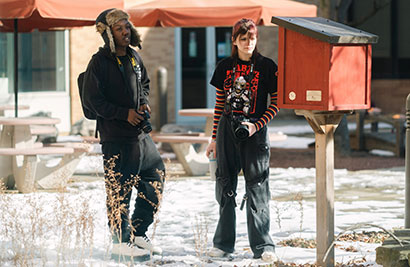 Into gaming or computers? Consider computer information technology, cybersecurity or computer science. Learn skills used to build, maintain and protect technology.
- Love cars? How about automotive technology or collision repair? You’ll develop hands-on skills to diagnose, repair and restore vehicles.
- Like building or fixing things? Welding, manufacturing and industrial maintenance prepare you for careers where you can see the results of your work.
- Interested in robots and automation? Mechatronics combines mechanical systems, electronics and computers to keep modern manufacturing running.
- Enjoy creating videos or digital content? Explore digital media, graphic design and other creative career paths.
- More of an adrenalin junkie? Consider a career as a first responder: EMT/paramedic, firefighter or police officer.
These are just some of the many options you can explore. You don't need to be an expert or know exactly where an interest might lead. Try a class and see if it’s a good fit. If it’s not, try a different class in a different area. You may discover a career option you hadn't even considered.
But the reality is, you’re going to need to do something. By 2031, 72% of all jobs in the U.S. will need some type of training or education beyond high school, according to Georgetown University.
You can achieve this at CLC.
Ethan Garcia liked how the college let him test his interests affordably and close to home. And before he committed to a program.
“It gives you a lot of options to explore different career paths.”
Garcia’s plan is to pursue a two-year Associate of Arts degree in Computer Information Technology. He likes knowing he has flexibility if his interests evolve.
“If I don't end up liking this, I can always try something else, and it'll be offered here as well,” he said.
Explore career options with Career Coach
Meet people who share your interests
Think about the last time you really connected with someone. Chances are, you had something in common.
Maybe you were playing Call of Duty or Stardew Valley. Or working on a car, talking sports or figuring out how to solve a problem together.
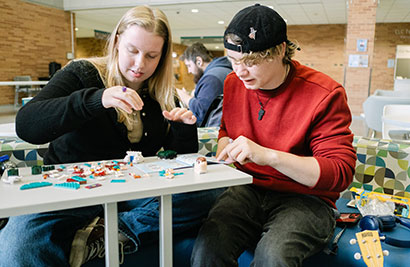 College can create more opportunities to make those connections.
At CLC, you'll meet people from across Lake County who bring shared experiences, interests and goals to the classroom.
Some classmates might be fresh out of high school. Others might be returning to college after working for several years. Whatever your age, you’ll find others just like you: People who are building skills and figuring out where they want to go.
Hands-on programs let you work together with classmates on projects to solve problems. In other classes, you'll discuss ideas and viewpoints. You’ll work through challenges and get to know people who see things differently.
Outside the classroom, you can connect with people who share your interests. Join a student club. Participate in campus activities, sports and other opportunities. Explore student life at CLC.
Dylan Smith found connections on the CLC esports team.
“Before I was on the team, I was just kind of living solo. Esports helped me realize that an in-person community is important to me,” he said. “Playing in person as part of a team is way more fun. You build camaraderie more quickly because you can see everyone. You can put a face to a voice,” said Smith, who has been playing Overwatch competitively since 2018.
You don't have to show up to CLC knowing anyone. You just have to put yourself out there. Shared interests and experiences will help you find:
- Study partners
- Friends who share your hobbies
- People you can network with professionally
These connections make college (and life!) more enjoyable. You’ll have people you can learn from and who encourage you along the way.
Support from faculty and staff made a difference to Phil Edwards, who attended CLC.
“I was told by someone they were proud of me. That’s not something I’ve heard a lot, and sometimes that’s all I need.”
Build skills that can lead to financial independence
Maybe you're working right now, but your paycheck isn't getting you where you want to be.
You want to afford your own place, buy a reliable car, save money or support your family.
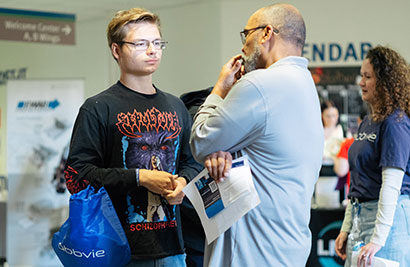 You might be looking for your first full-time job and want more than another temporary position.
Those are good reasons to think about your next move.
Education and career training give you skills to qualify for new opportunities.
At CLC, you can choose a path that fits your goals:
Career certificates focus on specific job skills. Some CLC certificates can be completed in as little as four months, depending on the program.
Associate degrees provide broader education and career training. They prepare you for the workforce. They typically take full-time students 2 years to complete.
Transfer degrees let you begin your education at CLC. Spend 2 years at CLC, then transfer to a 4-year school to complete a bachelor's degree. Starting at CLC saves you money. And it offers guaranteed transfer admission to 33 4-year schools.
Some certificates are stackable. You can combine them and apply credits toward earning an associate degree. This lets you achieve milestones on your way to earning something more.
“Not every student is ready or able to commit to a two-year degree when they first enroll. Our short-term and stackable credentials let you start with a manageable goal,” said Miguel Mireles. He is dean of engineering, math and physical sciences at CLC.
“You can learn, earn and continue building. As your career and goals change, you have a pathway to come back and advance rather than having to start over.”
Miguel Ramirez went to CLC to improve his work prospects by earning a career certificate.
“I was staying stagnant. I couldn’t really move up from where I was. In just one year, I’m going to be able to move into something better for me and my family.”
You don't have to spend four years in college to start a career. And you don't have to stop learning once you land a job.
Need to complete your high school diploma first? You can do that at CLC, too. Check out our adult education program.
Explore degrees and certificates
Give college another shot on your terms
Maybe you already tried college.
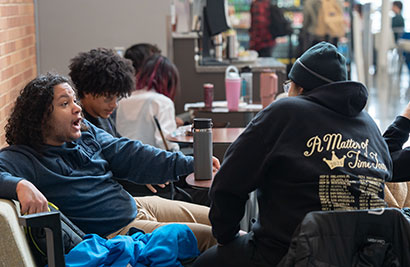 You enrolled right after high school because it seemed like the next thing to do. But the classes didn't interest you. Or the timing wasn't right or you weren't sure what you were working toward.
So you stopped going.
That experience doesn't have to determine what happens next.
A few years can change a lot. You've had time to work and develop your interests. Perhaps you took on responsibilities and learned more about what you want. You may have a clearer idea of the kind of job you'd enjoy or the lifestyle you're working toward.
And if you're still figuring it out, that's OK, too.
At CLC, you can explore your options with a College and Career Navigator before committing to a path. If you've attended another college, you can ask how to transfer eligible credits. This way, you don't have to repeat coursework unnecessarily. You may get credits for on-the-job experience or your knowledge of certain subjects.
Balancing school with work and other responsibilities can be a challenge. But attending part-time and taking online, evening and weekend classes makes this easier.
And CLC has a class specially designed for you. Called CLC 120, it helps you become a successful college student. You'll learn effective studying habits and test-taking skills. And get tips on everything from managing your finances to working with others from different backgrounds.
The class works. CLC research found students who enrolled in CLC 120 and met with their Academic Success Advisor in their first term returned in greater numbers to continue their studies in the second term. You gain confidence to navigate college, which helps you achieve your goals. Learn about the CLC 120 course.
Returning to college doesn't mean starting your life over. It means using what you've learned to make your next move.
 After a gap of several years, Freddy Munoz came back to CLC to finish his nursing degree. “I'm a returning student to the program,” he explained.
CLC instructors gave him their full support. “They really gave me the push on what my expectations should be going forward for the remainder of the program.” They even made homework accommodations after his daughter was born.
Becoming a nurse hasn’t been easy. But family motivates Munoz to succeed. “This is my why. Getting it done. Just being able to provide, make them happy, live my life with them, you know?"
Don’t let your previous college experience prevent you from moving forward. Meet with a College and Career Navigator. They’re not here to judge. Instead, they’ll help you:
- reflect on your goals and interests
- discover career opportunities
- access available resources
- choose a class or program to explore your interests
“We want to see you succeed and are here to provide the support in any way that we can,” says Ish Campos, CLC College and Career Navigator.
Meet with your personal college navigator
Find people who want to see you succeed
Nobody has everything figured out. And even when you know what you want, getting there will take work.
Maybe you're worried about struggling in class. You’re nervous about meeting new people or wonder whether you'll fit in.
You may have gotten used to handling everything yourself.
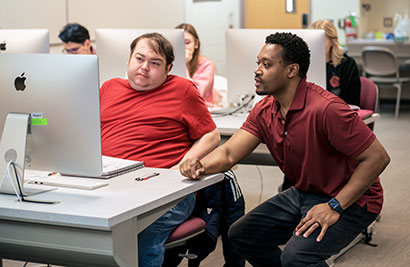 At CLC, you’ll have a support team to help you work through the challenges and stay focused on your goals.
Instructors help you understand new concepts and build confidence in your abilities.
They’re very engaged and will reach out to make sure you stay up with your classes, said Ethan Garcia. He is studying Computer Information Technology at CLC.
“It feels like they actually do care, and they want you to keep progressing,” Garcia explained.
CLC student Josue Velazquez agreed. “My professors saw more potential in me than I saw in myself.”
Tutoring offers support when a subject gets difficult. Academic Success Advisors help plan your course schedule so you stay on track to graduate or transfer.
If attending class in person isn’t your thing, online classes are an option. But taking an in-person class may surprise you. You might enjoy the camaraderie of working hand-in-hand with classmates on a project.
The Career and Job Placement Center prepares you for job opportunities. It also helps you find internships and apprenticeships.
And if you're dealing with stress, uncertainty or personal challenges? Stop by Counseling and Peer Support (CAPS), a free service for students.
Remember, knowing when to ask for help is a skill, too. There's no rule that says you have to keep everything to yourself.
Talking through a problem, asking a question or getting another perspective can help you figure out your next step. “CAPS is an excellent place to do this and to connect with other students,” says Director Samantha Marcellis. Brief, solution-focused drop-ins mean you don’t have to commit to long-term therapy.
“Having someone to talk to helps build a sense of belonging, which is a strong predictor of success in college,” she said.
Start small and build on every win
You might have a big goal: a career you love, a better paycheck, your own place or the ability to support the people who matter to you.
But you don't have to accomplish everything at once. Take it step by step.
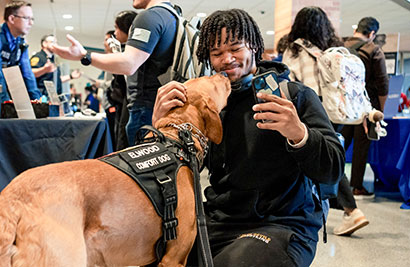 First, meet with a College and Career Navigator. Explore a career program. Sign up for a class. Or finish earning your high school diploma.
Before you know it, you’ve completed your first course. Wrapped up a hands-on project. Or earned a certificate.
Each accomplishment gives you something to build on.
You may discover you're better at something than you expected. You may meet an instructor who pushes you to aim higher. Or a classmate who introduces you to a new opportunity.
Your goals may change as you learn more about yourself.
That's part of the process.
Success isn't about following someone else's timeline. It's about making progress toward something that matters to you.
Consider the journey of Ryan Haass.
“I was a terrible student when I graduated from Stevenson High School,” he said. “I turned my life around in a very serious way at CLC.”
After CLC, he transferred to Lake Forest College on a scholarship to earn a bachelor’s degree. He then pursued a law degree from University of Illinois at Urbana-Campaign. Today, he’s an attorney in Chicago. His time at CLC left an imprint.
“The college is like a family to me. I feel at home here.”
Make your next move affordable
One of the biggest questions about college is whether it's worth the cost.
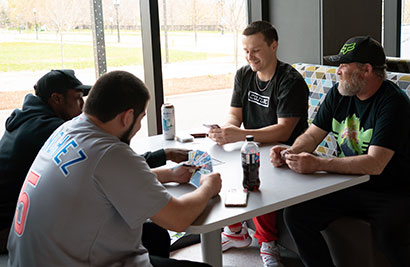 You might be concerned about student loans or how to pay tuition while working. Is it even worth it to invest your time in a program without knowing where it will lead?
CLC is an affordable way to explore college and career training close to home.
It provides lower in-district tuition than most four-year institutions. Scholarships, grants and financial aid help eligible students reduce their costs further.
The CLC website breaks it down for each degree and certificate option:
- how long it takes to complete
- the estimated cost
- the jobs or transfer opportunity it prepares you for
Your complete guide to understanding and paying for college
Start your next chapter with one step
You don't have to be fresh out of high school to start college. You don't need perfect grades, a detailed career plan or years of experience.
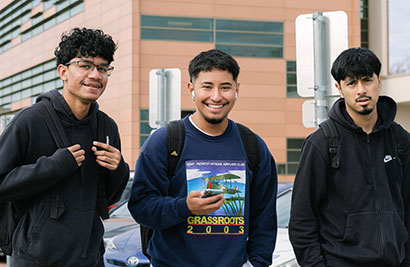 And you don't need to have it all figured out.
Maybe you're ready to turn a hobby into a career. Perhaps you want a better-paying job or an opportunity to meet new people who share your interests. Or maybe you simply want to see what you're capable of.
At College of Lake County, you can
- Explore your options
- Develop new skills
- Complete your high school diploma, a college degree or career certificate
- Connect with people who can help you move forward
Your next step doesn't have to be a big one. It just has to be yours.
Explore your interests, discover career paths and find a starting point that works for you.
Talk to your personal college navigator
Artificial intelligence helped organize and summarize this article. Guidance, tips and quotes from CLC experts and students are expressly their own.