



From seed to sale: CLC students grow fresh food and future careers
 Published August 26, 2026
You get more than fresh vegetables when you shop at the College of Lake County Farm Market in Grayslake, Ill.
You see firsthand what horticulture students can do.
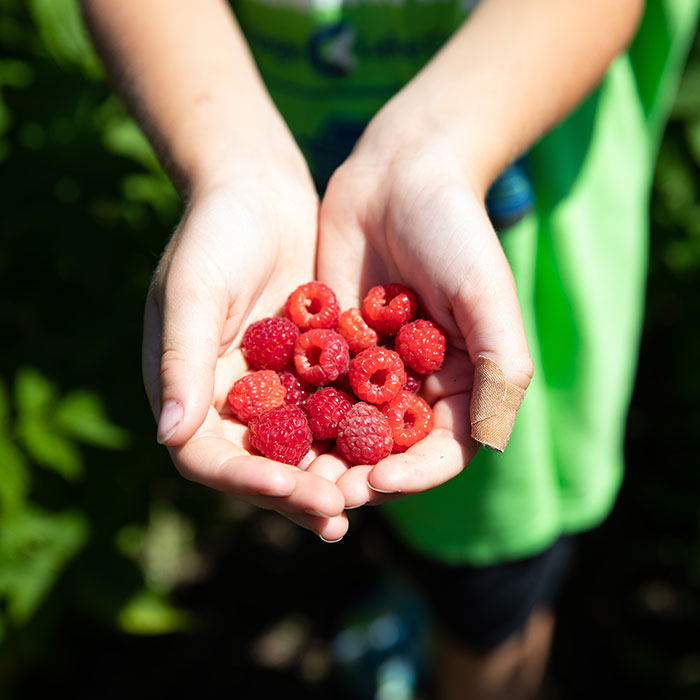
Students grow food on the school's one-acre campus farm. They gain hands-on experience while providing locally grown produce to the community. But the market also is a window to the school’s extensive Horticulture program.
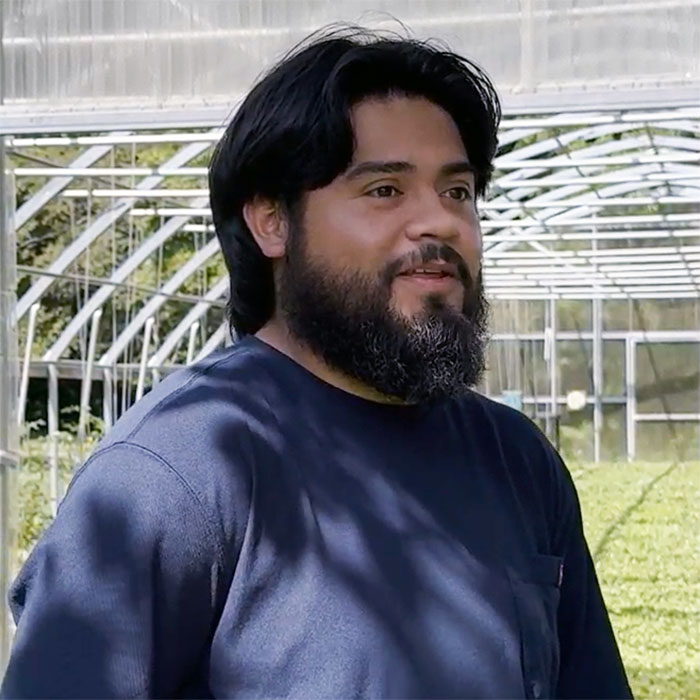
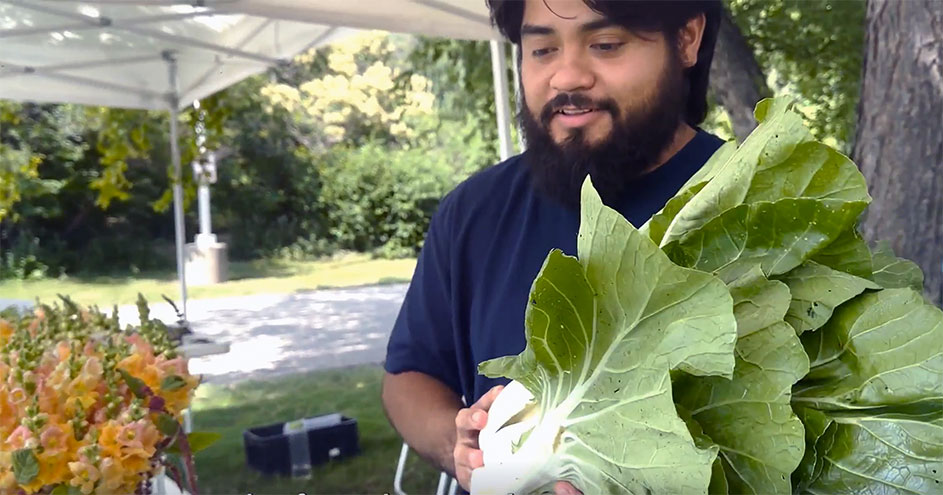
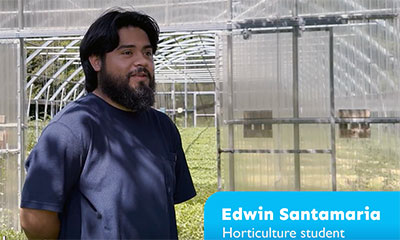 Student Edwin Santamaria works on the campus farm. What he learns in the field is preparing him for a future in landscape design.
“I love how each plant has its own significant value or purpose on this planet,” he said.
The journey of food from seed to harvest is a valuable learning experience.
“A lot of people do not know where their food comes from or what their food is, even,” said Horticulture Instructor Micah Slavkin.
Knowing how nature works can be an almost spiritual experience, he said. “It's a connection to the planet, and it really highlights the holistic nature of the process.”
Learn by getting your hands dirty
Santamaria’s interest in horticulture began with a simple interest in plants.
“My family always had house plants around their house, so I kind of grew up in the plant environment,” he said. “As I got older, I started buying house plants. That led me to farming outside, which also led me to finding that CLC had horticulture classes.”
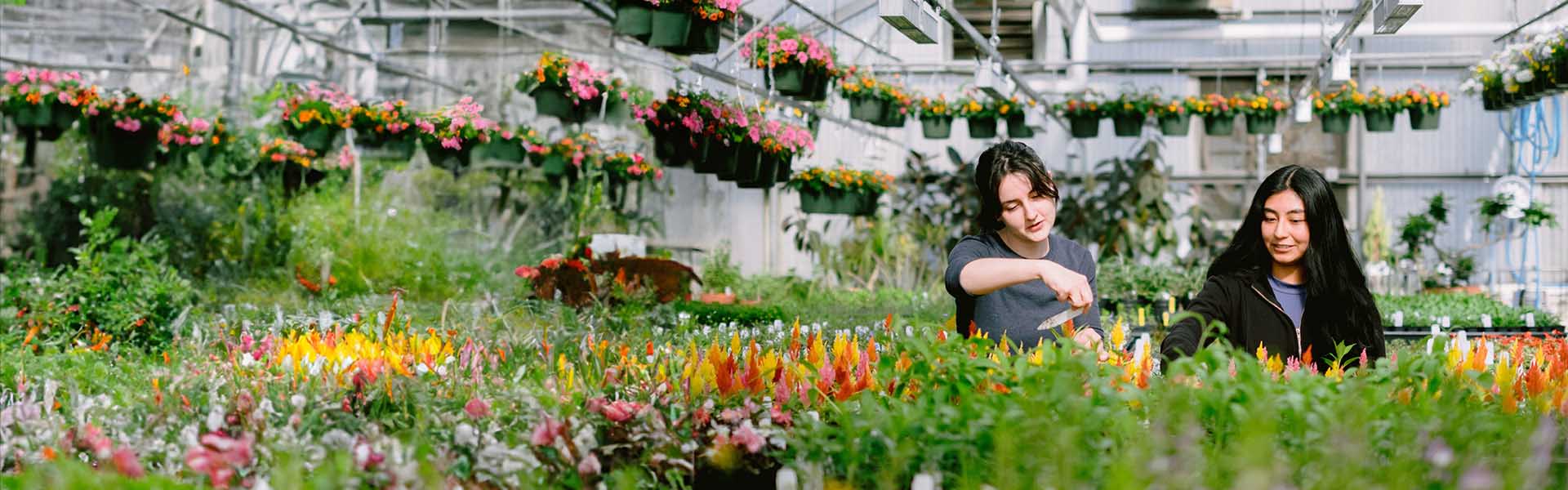
Besides the campus farm, students learn hands-on in two renovated greenhouses. They explore more than 300 species of trees and shrubs in the school's five-acre arboretum. And learn about natural areas on 170+ acres of turf, prairie, woodlands and wetlands.
Additional living laboratories include:
- Greenbelt Farm, located in the Greenbelt Forest Preserve, North Chicago
- Urban Farm Center at CLC’s Lakeshore Campus in Waukegan, offering controlled environment agriculture training, a commercial kitchen and market outlet for local foods
You can’t find such resources at every school. “It's a lot for a horticulture department to have and to offer their students,” said John Zahina-Ramos. He chairs the horticulture department at CLC.
Santamaria likes learning by doing, compared to only learning through books or online.
“Getting to experience how it actually is in the field, it's a lot better,” he said.
“Hands-on activities and hands-on training are very much a part of our classes," said Zahina-Ramos. "It's important that we produce students who are job ready and have the kind of technical skills that will be a good fit for the careers they're going into.”
Study horticulture to fit your interests
Feeding people through sustainable agriculture is just one path you can explore through CLC Horticulture.
You can earn a one-year career certificate in six different areas. Or a two-year horticulture degree. It all depends on your interests and career path:
- Horticulture Associate in Applied Science (A.A.S.) degree – Prepare to manage plant-centered enterprises. And potentially start your own green small business.
- Landscape Design Certificate – Design outside spaces where people interact in the urban environment.
- Landscape Construction and Maintenance Certificate – Build and maintain sustainable landscapes. Master pest surveillance, responsible fertilizing, pruning and customer service.
- Sustainable Agriculture Certificate – Grow produce using sustainable practices, including organic and permaculture techniques.
- Arboriculture Certificate – Care for trees through pruning and managing pests and disease.
- Horticulture Production Certificate – Grow plants for landscaping, land restoration or retail stores. Use techniques for nursery production and hydroponics.
- Natural Areas Management Certificate – Restore natural lands. Use scientific principles of restoration ecology and conservation biology.
You can stack certificates to achieve more. Here's an example: Combine the Landscape Design and Landscape Construction and Maintenance certificates. Each certificate on its own requires 20 credit hours. But because some courses are shared, you can complete both in about 30 credit hours.
All credit hours earned with certificates count toward your A.A.S. degree in horticulture, if you choose to pursue it. Plus, you earn important milestones on your way to completing a degree.
Learn skills employers need
CLC horticulture programs prepare students to work in plant-based industries.
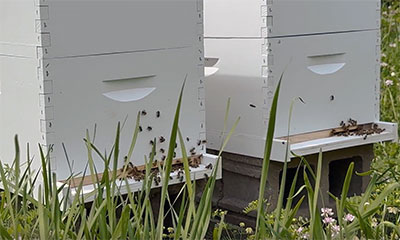 “Students who graduate from our programs generally go into entry level or just above entry level positions in a wide variety of jobs,” said Zahina-Ramos.
You don’t need to know your exact path when you start at CLC. Taking a single horticulture class can open your eyes to opportunities in the field.
“We often have students come into the department without a lot of confidence in knowing where they're going to go with a career. After they get into our department, they find that they really do love being in horticulture,” Zahina-Ramos said.
Santamaria found his direction in landscape design. After graduating, he plans to work for a landscaping firm doing design work. He’s also going to continue his education in landscape architecture.
At CLC, students train on the latest equipment and technology. They also learn proven, traditional approaches. Both prepare them to succeed in the real world.
Internships and apprenticeships connect you with employers
CLC has many connections with Lake County employers. This helps you move from classroom to career:
Internships – Gain work experience to build your resume. In some cases, horticulture internships may transition into permanent positions after graduation. Learn about internships and how to get one as a CLC student.
Apprenticeships – An employer pays for you to go to school and gives you time to attend class while you work and earn a paycheck. When you graduate, you can continue working for the company. “It's a win-win situation for both the student and the employer,” said Zahina-Ramos. Learn how to become an apprentice.
Full-time positions – Employers in Lake County want to hire CLC graduates. Experts at the CLC Career & Job Placement Center know who's hiring. They help you create a resume, practice interview skills and find a full-time position. Learn how CLC helps you get a job.
Shop local and support student learning
The CLC Farm Market brings hands-on learning and community experiences full circle.
 “What we eat affects our moods, affects our overall health. That's one reason that I come here and shop,” said Jubilee Chang. She visits the CLC Farm Market to buy local, organic produce.
She’s also a culinary arts instructor who teaches high school students. “I strongly recommend them eating nutritious fruits and vegetables,” she said. Whether her students, colleagues or family: “I want them to be healthy.”
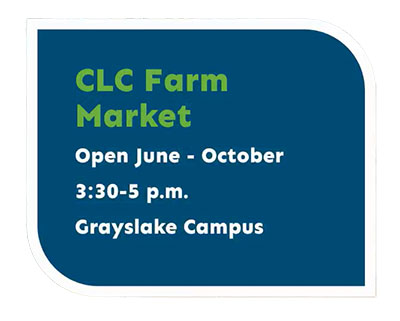
The Farm Market is open Thursdays, June to October, 3 – 5:30 p.m. at Grayslake Campus, Building H. Get market details.
For Santamaria, growing food for others is part of what makes the campus farm meaningful.
“It's very nice to have fresh, locally grown produce instead of going to a big box store,” he said.
Growing food for residents has helped him feel connected to CLC and Lake County. “It feels like you're part of the community,” Santamaria said.
If you’re thinking of studying horticulture, his advice is simple:
“Don't be afraid to get your hands dirty. Go out there, be with be one with nature, and you'll really enjoy it.”
Artificial intelligence helped organize and summarize this article. Guidance, tips and quotes from CLC experts and students are expressly their own.