
Is College of Lake County a good school?
 Published May 11, 2026
The real story about community college, value and your future
If you’re considering College of Lake County (CLC), you may be hearing mixed opinions. Some people think community colleges are not the best choice. Others say they’re the smartest decision you can make. So what’s true?
Quick summary:
- College of Lake County is a fully accredited, nationally recognized college. Learn how it exceeds standards to deliver quality education.
- You’ll save significant money attending CLC vs other colleges and trade schools. Discover how to go to college with low to no debt.
- Many students transfer from CLC to 4-year colleges and universities to earn a bachelor’s degree. Explore seamless transfer opportunities at CLC.
- Engaged faculty and small class sizes deliver personal guidance and support. Learn how this helps you succeed in class and life.
- Students who attend CLC graduate and can find good jobs. Discover how CLC works to improve student outcomes.
- Support services help you stay in college and succeed. Explore how CLC’s wraparound approach makes a measurable difference.
- An active social scene keeps you engaged, if you choose to participate. Learn about sports, clubs and other activities that make up CLC's vibrant student life.
- CLC delivers an excellent return on investment for your time and money. Discover why attending CLC is a good strategic move that pays off for many students.
Yes — CLC is a fully accredited, nationally recognized college
One of the first questions to ask about any college: Is it accredited?
 Accreditation is important. It means:
- Your credits are transferable
- Your degree is recognized by employers
- You qualify for federal financial aid
- The school meets strict academic and operational standards
College of Lake County (CLC) is accredited by the Higher Learning Commission. This is the same organization that accredits major universities across the central U.S.
CLC is a federally designated Hispanic-Serving Institution (HSI) where 43% of students are Latinx (2025 CLC Community Impact Report). As an HSI, CLC receives federal grants to expand educational opportunities for Hispanic Americans and other underrepresented populations.
The school also was named a Leader College of Distinction by Achieving the Dream (ATD). ATD recognizes community colleges for being accessible hubs of learning, credentialing and economic mobility.
CLC has been a member of the ATD Network since 2019. It has held Leader College of Distinction status since 2025. And Leader College status since 2023. This puts CLC in the top 10% of more than 400 community colleges participating in the program.
“The 2026 Leader Colleges of Distinction demonstrate sustained commitment and measurable progress in advancing student success,” explains Dr. Karen A. Stout, president and CEO of ATD.
CLC increased course success rates, student retention and program completion rates. It uses data to guide continuous improvement. It incorporates effective practices into college-wide operations. And it responds to the needs of students, especially those missing or left behind in the pursuit of education. Learn more about CLC’s Leader College of Distinction recognition.
CLC also is one of the Top 200 U.S. Community Colleges eligible for the 2027 Aspen Prize. This is one of the most prestigious recognitions in community college education.
“The Aspen Prize rewards colleges that achieve the kind of outcomes that actually matter to students—completing college degree programs that, in turn, lead to lifelong success,” said Josh Wyner, executive director of the Aspen Institute College Excellence Program. Read more about the Aspen Prize recognition.
CLC delivers the kind of life-changing education that makes the American Dream possible.
Miguel Ramirez went to CLC to improve his work prospects by earning a career certificate. “I was staying stagnant. I couldn’t really move up from where I was. In just one year, I’m going to be able to move into something better for me and my family.”
Individual programs meet national standards
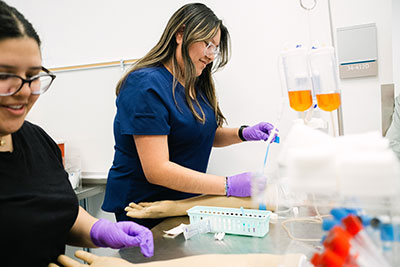
Some programs taught at CLC also are accredited by national organizations and associations. They are rigorously evaluated to make sure they meet or exceed national industry standards. This includes instruction, facilities, equipment and curriculum.
With accredited programs, you gain the latest knowledge and skills valued by employers. And you learn in modern facilities equipped with the newest technology.
CLC has received national accreditation and / or approval for the following programs:
- Automotive Collision
 Automotive Technology
- Precision Machining Technology (CNC)
- Dental Hygiene
- Health Information Technology
- Health and Wellness Promotion
- Human Services
- Legal Studies
- Medical Assisting
- Medical Imaging
- Nursing
- Phlebotomy
- Surgical Technology
- Yoga Teacher Certificate
- Children's Learning Centers
Even online courses meet the highest standards of quality. CLC is a member of the National Council for State Authorization Reciprocity Agreements (NC-SARA). The organization works to improve the access and quality of distance learning programs for students.
Joshua Cardin was impressed by the quality of the education he got at CLC.
“While I was in the Coast Guard, I’d take a class here or there online with other colleges. None of them hold a candle to CLC. It’s unbelievable how far the college is looking forward and how many opportunities are available for the people of Lake County.” Read how Cardin made his dream career a reality.
When you choose College of Lake County, you are choosing nationally recognized excellence.
You save money — A lot of money
Let’s talk about what matters most to many families when choosing a college: cost.
You’ll spend much less attending College of Lake County (CLC). Just compare what average tuition costs for a year:
- Annual tuition (in-district) at CLC: $4,494
- Illinois public university: $13,524
- Illinois private university: $34,618
(Source: Integrated Postsecondary Education Data System (IPEDS) 2023-2024 Tuition & Fees Rate Average)
Students who attend CLC for two years before transferring to a 4-year school save an average of $33,000 in tuition and fees.
If you live at home for two years while attending CLC, you can save even more on room and board. This helps make it possible to complete college without taking on big student debt.
That’s not a small difference. That’s life changing.
Reduce college costs further with financial aid
Financial aid can make going to college even more affordable. According to the 2025 CLC Community Impact Report:
- 32% of CLC students received federal Pell Grants, which is money that doesn’t need to be repaid
- Nearly $1 million in scholarships was distributed to CLC students last year
- $5.5+ million was raised to support students
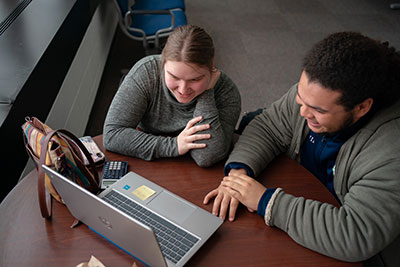 “At CLC, you already are saving a lot of money because it’s an affordable, high-quality education. But if you can get the cost reduced even more, that’s helpful, especially if you want to transfer to a four-year school,” says student Saffa Sakhi.
Financial aid is broader, more flexible and more accessible than many realize. However, applying for it does require gathering necessary documents and meeting application deadlines. Read CLC’s complete guide to paying for college.
“I know it takes time to prepare, but it's definitely worth it,” says Sakhi. “If you want a life with less debt, it helps to do the work now.”
CLC financial aid experts will walk you through the process. And it’s never too early to get started.
Financial Aid Coach Ashley Rico suggests scheduling an in-person or virtual meeting with a financial aid expert. Do this the semester before you plan to start college.
“If you’re starting in the fall, then come meet with us in the spring or summer. If you're starting in the spring, meet with us in the fall,” says Rico.
Kendra Anderson, who studied elementary education and Spanish, says CLC makes education doable.
“I wish people knew how friendly everyone is here at CLC and how amazing of an education opportunity you have at a cost that you can afford. There are a lot of schools out there that cost a lot of money because college is expensive. CLC is affordable. It's local. It makes education doable. And for me with four children, it has made my education possible.” Follow Anderson’s journey.
If your concern is the return on college investment, CLC offers one of the strongest financial starting points in Illinois.
You can transfer to major universities
A common myth is that community college credits don’t transfer. That’s false.
Students at College of Lake County (CLC) regularly transfer to 4-year universities to complete their bachelor’s degree. According to the 2025 CLC Community Impact Report, they most commonly transfer to these schools:
- University of Illinois Urbana-Champaign
- University of Illinois Chicago
- Illinois State University
- DePaul University
- Northern Illinois University
The top five programs studied by CLC students who transfer are
- Engineering
- Nursing
- Business
- Psychology
- Biology
Seamless and stress-free transfer process
The State of Illinois guarantees admission of community college students to 4-year schools. As long as you meet the school’s minimum transfer requirements, like grades and number of credit hours, you’re in.
CLC aims to make the transfer process seamless and stress free. It offers Guaranteed Transfer Admission to many 4-year schools. You can explore transfer opportunities by college, major and articulation agreements. CLC hosts transfer planning workshops. At transfer school fairs, you meet university representatives in person.
Along every step of the way, transfer planning experts offer guidance and support.
"The fantastic academic success advisors prioritized me having my schedule right so I had the classes to transfer where I wanted to go," says Riley Pemstein. He transferred from CLC to University of Illinois Urbana-Champaign to complete a bachelor’s degree in accounting. He now works as a Certified Public Accountant (CPA). Read Pemstein’s story.
 When you transfer credits from CLC to a 4-year college, you
- Complete your first two years at lower cost
- Transfer seamlessly
- Graduate with the same bachelor’s degree as someone who paid double
- Are better prepared for the rigors of university coursework
In fact, when you go to community college first, you're more likely to complete your bachelor’s degree. This is according to data from the Illinois Board of Higher Education.
And those two years at CLC can help you grow personally, too.
“As an 18-year-old, I found CLC to be a good transition from high school to college. Some of my friends who went to four-year schools said it was a big jump, and they felt they were thrown into the fire. CLC is a more gradual transition. It’s closer to home and family,” explains Pablo Valencia Garcia.
He attended CLC for two years before transferring to Northern Illinois University to earn a bachelor’s degree. He then went to Illinois State University for a master’s degree in athletic training.
Za’Tozia Duffie likewise built a strong foundation at CLC, where she studied communications. She transferred to Lake Forest College for her four-year degree. Then she went to Syracuse University to earn a graduate degree in journalism.
“I don't think I would have been able to grow academically, or even personally, if it wasn't for CLC,” she says. Read about Duffie’s experience at CLC.
Rest assured, your time at CLC prepares you for future success.
Explore transfer planning at CLC
You learn from experienced faculty in small-class settings
More than 1,000 full-time and part-time faculty teach at College of Lake County (CLC). Nearly all have post-graduate degrees. They teach the same materials you’d learn at a big school. But instead of doing research, their focus is only you.
Providing you a quality education is the #1 priority of CLC faculty. They help you build a solid academic foundation and hone your skills.
This prepares you to succeed when you transfer to a 4-year school to earn a bachelor’s degree.
 “Small class sizes are very personal with more time for one-on-one. Especially in difficult courses that I struggle in, I feel comfortable enough to ask questions,” says Estefanni Caballero. She went to Lake Forest College to study business after graduating from CLC.
It was easy for her to build personal and professional relationships at CLC. “I met like-minded students and instructors who made an impact. I still keep in touch with them after graduating.” Learn how Caballero gained real-world career experience while at CLC.
And you learn to apply practical workforce skills to start or advance your career.
It helps that many CLC instructors are industry professionals with real-world experience. They understand the skills needed to thrive in a chosen field. And they are well-connected with area employers. This ensures you’re learning the high-demand skills employers seek in a new hire.
Consider Ian Velasquez, who earned a General Welding Certificate at CLC.
“At CLC I learned all the skills I need to enter the welding and fabrication industry one step ahead of everyone else. The teachers were attentive and helpful throughout my time in the program.”
As well, many instructors and support staff at CLC have decades of service. More than 100 employees have worked 25+ years at the college, according to the 2025 CLC Community Impact Report.
This continuity matters. It means stability, mentorship and deep institutional knowledge. These help you achieve your goals.
You’re a name, not a number at CLC
Students consistently describe CLC faculty as supportive and invested.
"It felt like a community because there were actually those teachers that have time for you," explains Kenneth Dantes.
He studied literature at CLC, then transferred to Elmhurst University. He worked on film projects in Chicago to gain experience and network. He now works in the film industry in Los Angeles. Read about Dantes’ experience at CLC.
It’s easy to be seen and heard by your instructors when the average class size at CLC is 16 students.
 Compare that to large universities. There, introductory courses may have 200 to 400 students. Or classes may be taught by teaching assistants.
The small classes at CLC mean:
- Professors know your name
- You can ask questions
- You can build relationships
- You get support and understanding
- You can get recommendation letters
Instructor support has meant a lot to Megan Livingston, a standout on CLC’s Lancer softball team.
“CLC set me up to become the student-athlete I am today. It has taught me to create balance between school and sports, and a lot of that help came from professors being so understanding of what being a student-athlete entails. Through my career here, I have found what I am passionate about both academically and athletically.”
Livingston studies accounting at CLC. She expects to transfer to a four-year school to earn her bachelor’s degree. Read how she plans to steal 100 bases and maintain her 4.0 grade point average.
Adds David Brent, who earned a Residential Heating Technician Certificate at CLC:
"CLC is a great place to receive an education. It has ample resources and genuine people who care not only about the student but the person who wants to be successful."
Students graduate and succeed
Going to college isn’t easy. It’s even harder if you’re also working, a parent or have a full plate of other responsibilities.
That’s why College of Lake County (CLC) aims to make it less complicated to start and finish your degree or certificate.
 Toward this end, the school undertook a multi-year, data-based effort to better support student success. The results were significant:
- More students stayed in school. Those who finished their first term and went on to enroll in their second term rose from 74% to 79%. Black students (+8 points), Latinx students (+4) and part-time students (+7) made gains.
- First-time, full-time college students achieved. Three-year graduation rates increased 10 points from 29% to 39% for these credential-seeking students.
- Career certificate students excelled. Graduates in workforce-aligned certificate programs increased by 40%. Overall, graduates at CLC increased by 16%.
Since fiscal year 2019, the number of credentials awarded by CLC has increased 71%. Read more about student success gains driven by CLC’s campus-wide culture of data.
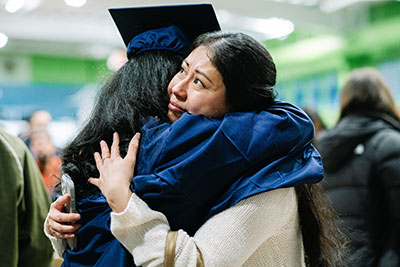
One of these success stories is Luzbeth Perez, who studied Digital Media and Design at CLC. At first, she struggled in class. But with support from CLC faculty, she graduated magna cum laude or “with great honor” in the top 10% to 15% of her class.
“I accomplished goals I never thought I could in my time at CLC. I earned straight As and became part of the honor society. I started drawing art! CLC is a place where you can succeed in your education,” she says. Read about Perez’s college experience.
Since it began in 1969, CLC has awarded more than 99,000 degrees and certificates. In 2024 alone, more than 3,600 graduates earned 4,100 credentials. That’s a 16% increase from the previous year, according to the 2025 CLC Community Impact Report.
You’ll get a job with career outcomes built into the experience
Few people go to college just to get a degree or certificate. Most want the job opportunities that come from having that credential. This is true whether you’re starting, switching or leveling up your career.
You want to know: Will the time, money and effort you put into earning a credential deliver on its promise of a good job?
At CLC, the answer is yes. Career degrees and certificates will help you land an entry-level job in a high-demand field. Or teach you the skills you need to advance in your current role.
Consider some job placement rates for students who recently completed CLC credentials:
- Nursing Associate in Applied Science (A.A.S.) degree – 96.6% found a nursing job within 9 months of graduating
- Phlebotomy Technician Certificate – 75% found a job or continued their education within one year of graduation
- Legal Studies A.A.S. or Certificate – More than 90% hired or attending law school within 90 days of graduating
- Health Information Technology A.A.S. – 100% were employed within 6 months of graduation if actively seeking employment in health information management
Job-focused learning activities include hands-on clinical experiences. These let healthcare students hone skills learned in the classroom. They also connect with local employers.
Paid internships and apprenticeships do the same.
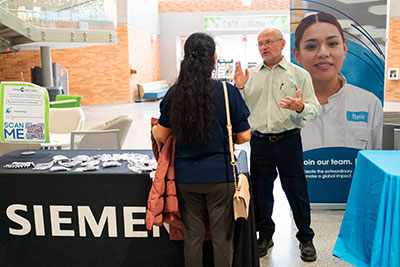 The CLC Career and Job Placement Center coordinates internship and apprenticeship opportunities. According to the 2025 CLC Community Impact Report, the center connected students to employment by:
- Hosting 1,298 one-on-one career appointments
- Finding opportunities for 81 apprentices working at 16 employer partners
- Working to ensure a 90% apprenticeship retention rate
CLC works with local partners to align credentials with industry demand. These include Lake County healthcare, clean energy and manufacturing businesses.
Consider the CLC Manufacturing Alliance. It works with area manufacturers to connect workers to education. The goal: bring manufacturing 5.0 to Lake County.
Career advisory committees also weigh in. More than 500 professionals representing 350+ businesses serve as CLC advisory members. Some industry experts use their knowledge to advance curriculum, update equipment and more.
The goal? Make sure students get the skills they need to thrive in their chosen field. Today and in the years ahead.
“This program was a blessing for me,” says Richard Martinez-Messner, a graduate of the Climate and Equitable Jobs Act (CEJA) Waukegan Hub Training Program at CLC. He learned foundational technical skills relevant to working in clean energy jobs. He also gained crucial soft skills like communication, problem-solving and teamwork.
“I believe with all these skills I’ll be able to have a very successful career,” he says. Read more about Martinez-Messner's participating in the CEJA program.
Support services make a measurable difference
College of Lake County (CLC) has a deep bench of academic and wraparound support services. These services aren’t just nice to have. They contribute to academic success.
Consider the college’s free tutoring program. It is certified by the College Reading and Learning Association.
Students who use tutoring do better in college. They experience success rates up to 32 percentage points higher in key courses, states the 2025 CLC Community Impact Report. That can mean the difference between a passing and failing grade. Or feeling confident vs. unsure in your abilities.
Brody McGuire used the tutoring center during most of his time at CLC. First, he got help writing essays. Then for accounting, which he's studying now at Illinois State University after transferring.
“The tutors are very prepared and really knowledgeable about things I consider really hard,” he recalls. “Instead of just giving me the information, they explain it step-by-step from the beginning.”
Learn how CLC supports your academic journey
Advising dramatically improves student outcomes
A structured support model called the Lancer Success Framework helps students thrive at CLC.
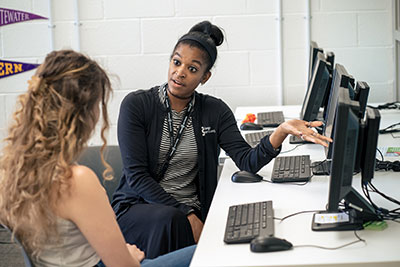 Two groups of experts play essential roles:
- College and Career Navigators. They help you apply, enroll and register for first semester classes. They get you onboarded, help you choose an academic program, and get you access to resources.
- Academic Success Advisors. They step in after onboarding. They help you set academic goals, choose classes and map out your class schedule. They keep you on track to meet requirements to graduate or transfer. They also help you access resources at CLC.
Meeting with these experts well before the start of each semester has an impact.
According to the 2025 CLC Community Impact Report:
- 90% of applicants who met with a navigator enrolled at CLC, compared to 20% who didn’t
- 85% of students who met with an advisor progressed to the next semester, compared to 59% who didn’t
- Students who meet with advisors were 4.5 times more likely to reach their goals
Vanessa Lopez says the support she received at CLC made college education possible.
“I loved my time at CLC and continuously tell everyone they should start there,” she says. “Everyone is so supportive. As a first-generation college student, I didn’t know how things worked. The support is what made it possible for me to go to school.”
Lopez transferred to Northeastern University, taking classes at the University Center of Lake County in Grayslake. There she earned a bachelor’s degree in psychology. Since then, she's gone on to pursue two master’s degrees, plus other credentials. She teaches early childhood education at Round Lake Area Schools.
“CLC made it possible for me to continue going to school,” Lopez says. “The college does more than it will ever know for students like me.”
This isn’t accidental success. It’s engineered support.
Explore how CLC supports your academic journey
Wraparound support reduces dropout risk
CLC recognizes that academic success isn’t just about taking classes. Rather, it takes holistic support to help students thrive throughout their academic journey.
According to the 2025 CLC Community Impact Report, popular wraparound services include:
- On-campus health clinic – 3,378 visits
- Mental health services – 3,300 appointments
- SHARE Market food pantry – 8,782 visits
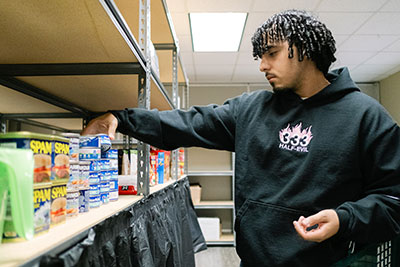 Students also work one-on-one with experts to get the support they need. These include
- access and disability specialists
- undocumented student resource advisor
- community resource coordinator
Students say these and other services make a difference in their ability to achieve.
“CLC has a lot of resources for everyone, including parents. There’s a daycare center downstairs that is open during your class schedule. They also offer classes at night and during the summer. Things like that show the college is trying to tailor to your needs,” says Amber Wheaton. She studied nursing at CLC.
The support services at CLC helped Ryan Haass see his own potential.
“I was a terrible student when I graduated from Stevenson High School,” Haass admits. “I turned my life around in a very serious way at CLC. The support and resources are there if you just go for it.”
After CLC, he transferred to Lake Forest College on a scholarship to earn a bachelor’s degree. He then pursued a law degree from University of Illinois at Urbana-Campaign. Today, he’s an attorney in Chicago. His time at CLC, where he also tutored fellow students, left an imprint.
“The college is like a family to me. I feel at home here.”
Support is not an afterthought at CLC. It is an investment in people.
Explore support services at CLC
Campus life is real — not “college lite”
Student life at College of Lake County is vibrant. You have many opportunities to engage, if you choose to do so.
According to the 2025 CLC Community Impact Report, the college offers:
- 34 student organizations
- NJCAA athletics
- Esports
- Study abroad in 17+ countries
- Many performing arts events with 38,000 patrons attending in 2024
 These experiences can be transformative.
Adriana Colin was one of 10 students who studied anthropology at Ajman University near Dubai. She found the CLC study abroad program enlightening.
“I’d never had an experience with students from other countries with the same passions,” she says. Learn more about her study abroad experience in the United Arab Emirates.
Getting involved in campus life can open doors to new opportunities. Art history student Jia Buque never imagined the impact it would have until she took the chance.
“The people I’ve met at CLC are the best part. I’ve connected with students from all walks of life, learning about their goals, stories and aspirations. There’s always something new to learn,” she says. Read about her journey into campus life.
Campus life is what you make it — and CLC provides real opportunities.
What is your Return on Investment (ROI) at CLC?
You can calculate Return on Investment (ROI) – sometimes called Return on Education or ROE -- in many ways.
Here is a quick breakdown for College of Lake County (CLC):
 Financial ROI:
- $33,000+ average savings in tuition and fees vs 4-year Illinois university
- Reduced student debt with financial aid and scholarship opportunities
- Housing and transportation savings with CLC close to home
- Higher likelihood of completion due to support
Career ROI:
- Strong job placement rates
- Apprenticeships, internships and clinical experiences
- Industry partnerships
- Workforce-aligned credentials
Personal ROI:
- Smaller classes
- Faculty mentorship
- Structured and personalized advising
- Mental health and other support services
Strength you can count on
CLC has strong finances. You can count on the college to remain fully accredited and operational during your studies. It is not at risk of closing its doors, like some higher ed institutions in the U.S.
The 2025 CLC Community Impact Report cites these facts about the school:
- AAA bond rating
- $134 million operating budget
- Deep community investment
- Nationally recognized
- Academically accredited
- Founded 1969
CLC is committed to improving student success. It continues to advance curriculum and is an active community partner.
The bottom line
Community colleges offer a different path to achieving your educational goals. For many students, this path is more strategic and makes financial sense.
 College of Lake County (CLC) is:
- Fully accredited
- Nationally recognized
- Affordable
- Transfer-focused
- Career-aligned
- Data-driven
- Student-supported
If you want:
- Low to no debt
- Smaller classes
- Real-world workforce preparation
- Structured support
- A strategic transfer pathway
CLC is a strong choice.
If you want:
- A large residential university experience immediately
- High-profile Division I athletics
- A specialized niche program not offered at CLC
- A traditional four-year campus culture from day one
You may prefer another path.
There is no universal “best” college. There is only the best fit for you.
But based on accreditation, student outcomes, financial value, support systems and national recognition, College of Lake County is a legitimate, high-quality institution worth serious consideration.
Artificial intelligence was used to organize and summarize this article. Guidance, tips and quotes from CLC experts and students are expressly their own.